Source Tapered Gutta Percha Points for Root Canal, Orthodontics, and Model Making
Find 30 listings for tapered gutta percha points suitable for root canal filling, orthodontic applications, and model making. Buyers can compare specifications like taper sizes, certifications, and packaging options from verified suppliers in China.
Key considerations
Products List






Comprehensive Sourcing Guide
Strategic Sourcing Guide for Tapered Gutta Percha Points
Understanding Technical Specifications and Material Composition
When sourcing tapered gutta percha points, buyers must first establish a clear understanding of the technical parameters that define product performance in endodontic procedures. The core material for these points is gutta percha, often compounded with zinc oxide, barium sulfate, and flexibilizers to achieve the desired physical properties. These additives are critical; barium sulfate provides radiopacity, ensuring the filling material is visible on dental X-rays, while the flexibilizer contributes to the softness and flexibility required for effective canal adaptation. The product is generally classified as a disposable item, intended for single-use applications to maintain strict hygiene standards in dental practices.
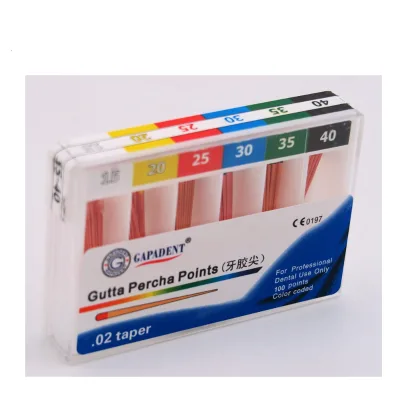
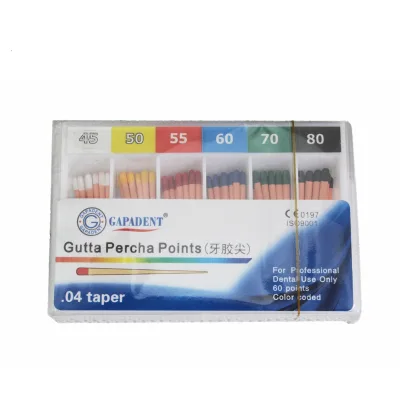
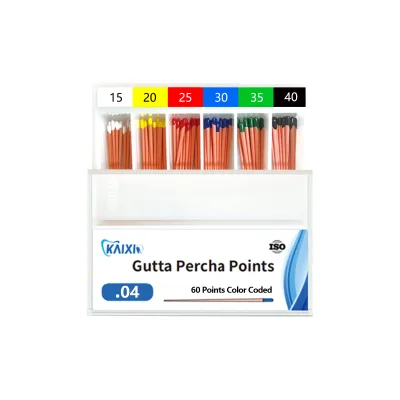
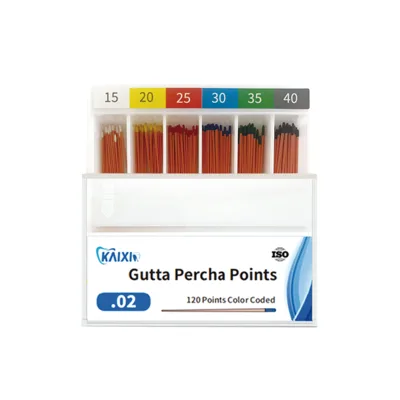
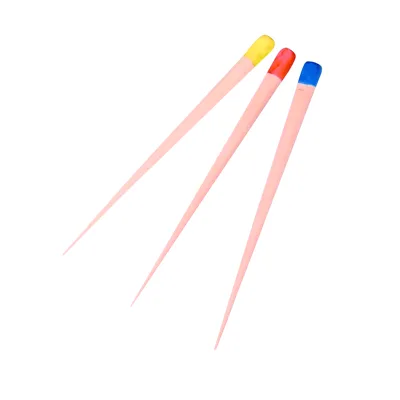
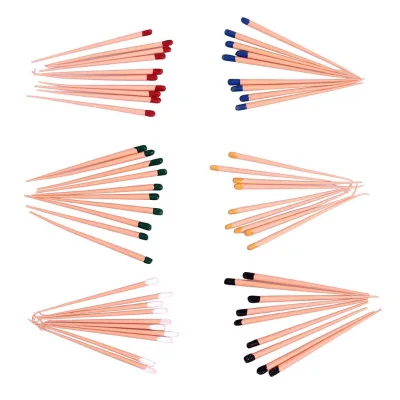
The taper of the point is a defining characteristic for tapered gutta percha points, distinguishing them from parallel-sided alternatives. Available taper configurations typically include 0.02, 0.04, and 0.06, allowing clinicians to match the point to the specific geometry of the root canal being treated. The sizing system is equally vital, with standard models ranging from G20 to G21, and size indices often spanning from 15 to 140. This numerical range corresponds to the diameter of the point at its tip, measured in hundredths of a millimeter. The length of the points is another critical specification, with common size groups including 15-40, 45-80, and 90-140. These dimensions ensure compatibility with various endodontic files and the specific anatomical requirements of different teeth.
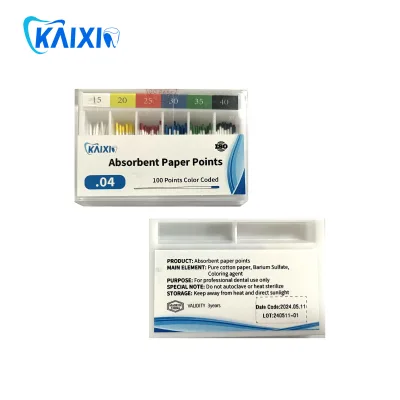
Packaging and storage conditions are equally important for maintaining the integrity of the material. The standard packing configuration often involves paper boxes containing 100 to 120 pieces per unit. Proper storage requires the product to be kept in cool, dark, dry, and well-ventilated conditions to prevent degradation of the gutta percha material. The shelf life of these points is typically three years from the date of manufacture, provided the packaging remains intact and storage conditions are met. Buyers should verify that the packaging includes millimeter markings, which assist in determining the depth of the canal and ensuring the point reaches the correct apical level during the filling procedure.
Compliance, Certification, and Regulatory Standards
Navigating the regulatory landscape is a fundamental step in the procurement of dental instruments. For gutta percha points, compliance with international and regional standards is non-negotiable to ensure patient safety and product efficacy. The most prominent certifications observed in the market include CE marking and ISO certification. The CE mark indicates conformity with health, safety, and environmental protection standards for products sold within the European Economic Area. ISO certification, while often referenced broadly, implies adherence to specific quality management systems and product standards relevant to medical devices.
In the context of dental materials, specific standards such as ISO 6877 and ISO 15 are frequently cited as benchmarks for root canal filling materials. While these standards provide a framework for testing dimensions, taper, and material properties, buyers must verify that the specific supplier's products have been tested and certified against these exact specifications. Additionally, the product classification often falls under Class I medical devices, which generally implies a lower risk profile but still requires adherence to safety standards like GB15979-2002 in certain markets. This standard relates to the safety requirements for single-use medical devices, ensuring that the materials do not pose a biological hazard.
Buyers should also scrutinize the "Instrument classification" and "Safety standard" fields on product listings. The presence of a specific safety standard number, such as GB15979-2002, serves as a tangible indicator of regulatory compliance. However, it is crucial to note that the mere presence of a certification label does not guarantee that every batch of product meets the standard. Procurement teams must request valid certification documents and test reports from the supplier to confirm that the specific model, such as the SD002 or GP21, has undergone the necessary validation. The origin of the product, often listed as Hebei, China (Mainland) or simply China, should be cross-referenced with the supplier's ability to provide traceable documentation for the specific batch being purchased.
Cost Drivers and Pricing Structures
The pricing of tapered gutta percha points is influenced by a complex interplay of factors, including material costs, manufacturing complexity, packaging, and order volume. The observed price range for these products in the market spans from $0.10 to $6.00 per unit, though this variance is heavily dependent on the specific configuration, brand, and order quantity. Lower prices often correlate with basic configurations or bulk purchasing, while higher price points may reflect specialized tapers, premium packaging, or established brand reputation.
Minimum Order Quantity (MOQ) is a significant driver of the total cost of procurement. Suppliers typically set MOQs to ensure production efficiency, with observed ranges varying from 1 unit to 600 units. Some listings indicate an MOQ of 10 boxes, while others may require 100 boxes or even higher volumes. This variability means that small clinics or startups may face higher per-unit costs due to lower volume discounts, whereas large dental supply chains can leverage bulk purchasing to reduce the average cost significantly. The "Supply Ability" of the manufacturer, often cited as 800 boxes per month, also plays a role in pricing stability; suppliers with higher capacity may offer more competitive rates for large orders.
Customization options represent another cost factor. The availability of OEM (Original Equipment Manufacturer) services allows buyers to brand the product with their own logo or specific packaging requirements. While this adds value for branding purposes, it often incurs additional setup costs or higher per-unit pricing, particularly for smaller order volumes. The weight of the product, such as 22g per box, and the density of the packaging (e.g., 10x8x2 cm carton dimensions) also influence shipping costs, which can be a hidden expense in the total cost of ownership. Buyers should calculate the total landed cost, including shipping and handling, rather than focusing solely on the unit price listed on the product page.
Typical Applications and Clinical Utility
Tapered gutta percha points are primarily designed for use in the field of endodontics, specifically for root canal filling procedures. Their application extends beyond simple filling to include various aspects of dental preventive health care and restorative dentistry. The primary function of these points is to seal the root canal system after the removal of infected pulp tissue, preventing reinfection and promoting healing. The tapered design allows for a better fit within the prepared canal, ensuring a tight seal that is crucial for the long-term success of the root canal treatment.
Beyond root canal therapy, these materials are utilized in a broader range of dental applications. They serve as filling materials for various dental procedures, including model making and denture processing. In orthodontic departments, they may be used as embedded materials or for specific lining applications. The versatility of gutta percha points also extends to maxillofacial prosthesis materials and dental preventive health care materials. The product's nature as a "shared instrument equipment" item suggests its use in settings where multiple practitioners may utilize the same supply, emphasizing the need for strict hygiene and single-use protocols.
The specific usage scenarios often dictate the required specifications. For instance, the "Applicable Departments" may include Oral Surgery and Orthodontic Departments, indicating the product's relevance in complex surgical and alignment procedures. The "Usage Times" attribute, listed as "Disposable," reinforces the clinical necessity of using a new point for each patient to prevent cross-contamination. The flexibility and softness of the material, described as "Thick, Flexible, Soft," make it suitable for adapting to the irregular shapes of root canals, which is essential for effective obturation. Buyers should ensure that the selected product matches the specific clinical needs of their practice, whether for general dentistry, specialized endodontics, or orthodontic applications.
Supplier Evaluation and Quality Assurance
Evaluating a supplier for gutta percha points requires a rigorous assessment of their production capabilities, quality control measures, and after-sales support. The "Supply Ability" of 800 boxes per month is a key metric for assessing whether a supplier can meet the demand of a growing dental practice or a large distribution network. Buyers should verify that the supplier has the capacity to maintain consistent production levels without compromising quality. The "After-sale Service" offering, such as online technical support, is another critical factor. This support can be invaluable for troubleshooting issues related to product performance or application techniques.
Quality control is paramount in the medical device industry. Buyers should look for suppliers who adhere to strict safety standards, such as GB15979-2002, and who can provide evidence of compliance through valid certification documents. The "Instrument classification" of Class I indicates a lower risk profile, but it does not exempt the product from rigorous testing. The "Principal Ingredients" list, including gutta percha, zinc oxide, barium sulfate, and flexibilizers, should be clearly defined to ensure the material composition meets clinical requirements. Any deviation in the ingredient mix could affect the radiopacity, flexibility, or biocompatibility of the final product.
Furthermore, the "Customization" and "OEM" capabilities of the supplier offer insights into their flexibility and commitment to client needs. A supplier that offers customization is likely to have a more robust quality management system in place to handle different specifications. The "Packing" details, such as the use of paper boxes or carton boxes, should be evaluated for their ability to protect the product during transit. The "Precautions" listed, such as storage in cool, dark, and dry conditions, should be clearly communicated to the buyer to ensure the product arrives in optimal condition. Buyers should also consider the "Shelf Life" of 3 years when planning their inventory management to avoid stock expiration.
Long-Term Procurement and Inventory Management
Sourcing tapered gutta percha points is not merely a transactional activity but a strategic decision that impacts long-term operational efficiency. The "MOQ" of 10 boxes or 100 boxes, depending on the supplier, dictates the inventory strategy of the buyer. For smaller practices, a lower MOQ may be preferable to minimize upfront capital expenditure and storage requirements. However, for larger organizations, higher MOQs may offer better economies of scale and reduced per-unit costs. The "Supply Ability" of 800 boxes per month suggests that the market can support significant volume, but buyers must ensure that the supplier can maintain this capacity during peak demand periods.
Inventory management must also account for the "Shelf Life" of the product. With a typical shelf life of three years, buyers should implement a first-in, first-out (FIFO) system to ensure that older stock is used before newer stock. This practice helps prevent waste and ensures that patients receive materials that are within their optimal performance window. The "Packing" configuration, such as 120 pieces per box or 100 pieces per pack, should be considered when calculating the number of boxes needed to maintain a sufficient stock level.
Long-term procurement also involves building a relationship with a reliable supplier. The availability of "Online Technical Support" and the potential for "Customization" and "OEM" services can enhance this relationship. A supplier that is responsive to inquiries and willing to accommodate specific needs is more likely to be a valuable partner in the long run. Buyers should also monitor the "Certification" status of the supplier, ensuring that their CE and ISO certifications remain valid and that they continue to adhere to relevant safety standards. Finally, the "Location" of the supplier, often in Hebei, China (Mainland), should be considered in terms of logistics and lead times, although specific lead times should be confirmed directly with the supplier rather than assumed.
FAQs
What certifications do tapered gutta percha points have?
These points typically hold CE and ISO certifications to ensure safety and quality. Some listings also reference compliance with safety standards like GB15979-2002 for single-use medical devices.
Which taper sizes are available for these dental points?
Available taper configurations include 0.02, 0.04, and 0.06 to match specific root canal geometries. The sizing system ranges from G20 to G21 with lengths spanning 15 to 140 millimeters.
Can I customize the packaging for bulk orders?
Customization is available for packaging and branding through OEM services. Buyers can request specific configurations, though setup costs may vary depending on the order volume and specific requirements.
How much is the minimum order quantity for these points?
Minimum order quantities vary by supplier, ranging from 10 boxes to 100 boxes. Some listings indicate an MOQ of 10 boxes, while others may require higher volumes for specific models.
What is the shelf life of gutta percha points?
The shelf life is typically three years from the date of manufacture if stored correctly. Products must be kept in cool, dark, dry, and well-ventilated conditions to prevent material degradation.
Where are these dental instruments manufactured?
The products originate from Hebei, China (Mainland) or other regions within China. Buyers should verify the specific origin and traceability of the batch when requesting certification documents.